The hippy surfer dream car
solar powered - just $129.000,00 if the vapor becomes a product. From inhabitat
Its like a dejavú for me of some sort. You know you come up with a story that you set in 10-20 years of the future and then only 2-3 years onward its already happening around you. First there was the viable solution for the tatooed interface featured in Kalkin:Revelation and then there is this blogger/artist who lost an eye in a car accident and now asks for engineers to make her a camera that she can plop into her empty eyesocket so she can blog about what she sees through her not so own eyes - just like my main character Ping - oh btw the tatoo interface and the eyesocket work in unison for ping - maybe that would be a good interface for the new cyborg lady from california too?
I am really not into any kind of motor sports but yesterday I came across a speed quad and thought I was temporarely beamed into a future that came straight out of a cool comic book. I had to look for a while and found that the vehicle in question is made by GG Quad. They only sell you a kit to roll your own. Sets you back between $55.000 and $65.000. I saw the one that you see in the picture in white and somehow all the motorcycles around it have lost all the "I want to be badass" appeal (to me at least). If you are interested go to the site for more pictures for various color combinations and addons.
I know that there are a lot of people out there dreaming of an "realtime" google maps in ultra high resolution - for some its a nightmare, for others its fun, for the next a business opportunity and for a small number a survival tool and for some freaks a surveillance tool. Well we are not at the point yet anyway so no need to get hyped up - but we are one step closer now. I was happy to learn that a company that is based in Brandenburg Germany (so its almost local for me - the town that hosts this very website) has been sending five satellites into space since 2007 that are making ultra fast very high-res pictures anywhere on the globe. Rapid Eye AG is private company running these together with the German Aerospace Center which has bought the rights to use the data scientifically. They are also for sale commercially.
Today was the opening of the operation center and everything apparently works as expected. I hope I can get a photo from then on here through my informant Cassandra (thanks!).
More about it in an old german article on astronews.com.
In a surprise announcement (read as: nobody saw that coming just yet) researchers at the University of Illinois at Urbana-Champaign have created an elastic image sensor that is mounted on a flexible silicone bubble that can be inflated. The silicone bubble protects the sensor and gives it heliospheric viewing angle. This is a big step forward for bionic eyes but in the shorter term (until they figure out how to wire this to the brain that is) it will revolutionize the way photographic camera lenses will work because stuff recorded with this sensor is always undistorted - something that lenses can only accomplish when there are lots of very very high quality lenses behind each other (read takes away light and makes the lenses extremely expensive). Also this approach would likely help to focus sub- and objects and do so much faster (inflate or deflate air instead of moving some heavy glass forward backward. It will be interesting to see how long this takes to hit the market - I think this will get into cellphones first as there is the biggest market with the biggest need of smaller lighter cheaper.
Original Article at nature.com
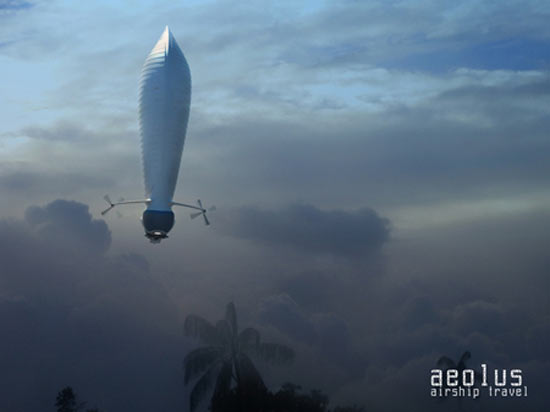
If we try and go inside ourselfs we are apperantly capable of making beautiful and usefull creations that inspire - like this Airfloating Jelly Fish.
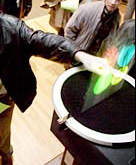
There have been hundreds of devices out in the last 100 years that all attempt to bring true 3d visuals to the masses. Now I tripped over the Cheoptics360 and I think this could be the real deal. While the website and the net in general is spare on details on how it actually works it surely looks like a R2D2 style hologramic projection is what this machine does - but watch the videos (and remember the videos you see are 2d so the 3d effect is not sooo visible - yet you can make out the floating object in front of the all the backgrounds which is a good indicator that this is actually working and quietly enough (read: no rotating mirrors) to be installed in an airport lounge. And large enough to eventually give us almost immersive environments... I still suspect this to be the old mirror trick but since its visible from 360 degrees this canīt be. Expect to see you live size game characters appear holographic in your living room in the next 15 years until then enjoy the video... or visit the developers vizoo website.
The Iraq war with its tens of thousand of lost limbs is creating a huge demand for prosthetics and it seems with lots of money to be made the artificial limb industry is working hard to get this bionic arm thing working. The inventor of the failed Segway two wheeled nobody needs it personal transportation device tries his genius anew and creates the first robotic arm that can pick up grapes and bricks without destroying either. It gives sensory feedback (although crude) and has a plethora of control mechanism (foot taps, nerve endings and muscle). Donīt let the prosthetic overlords take over out earth!
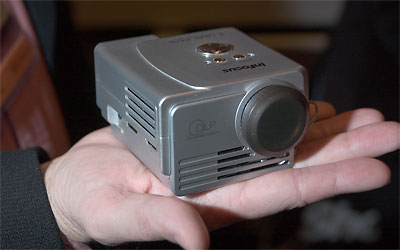
A Dutch comany called HoloCube starts marketing a similar called Device that lets you project movies in thin air. Its about 20 inch and geared towards the 3d advertising market (why? because it probably costs lots of mo and therefore the advertising market is the only market it could survive on). Expect StarWars HD quality holograms at your next fair visit. But donīt put you hand in one of these or they might get beamed to a 3rd dimension. (oh and of course in the video below you can NOT see the 3d effect as the video itself is only 2d! so just imagine the videos floating in air - if you believe the company. It must be the hardest thing to market anything "3d" with 2d mediums.)
![]()
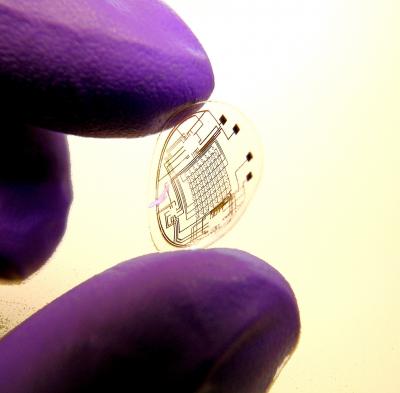
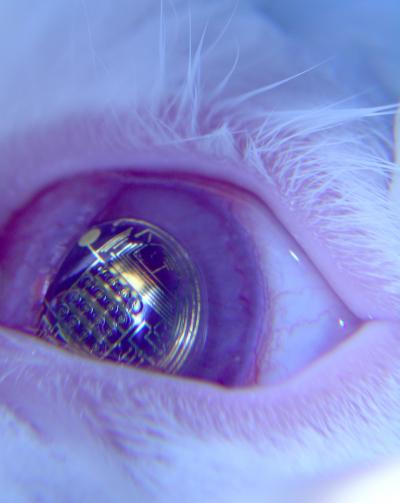
Again one of those "wow yeah" moments by just seeing the picture. After all these ultra ugly "screens inside sunglasses" product coming out in the last week its refreshing that technology still holds the potential of actually making itself hidden in the long run. The University of Washington has developed a process to print small circuitry on an flexible eye safe material. The mother-eye-board can also emit light.
Good great god - imagine having a ultra small spy cam that can see in the dark (or two for stereo vision) and you just wearing these contact lenses. The only give away would be that your eyes would glow eery blueish from the OLEDs - you might need to wear sunglasses after all for not being accidently shot by people who think you are alien.
The press release forgets to mention how the things are powered (inductive power right on your head canīt be that healthy) or how a filmfeed could be fed to them but I am sure we see this down the road - the potential (also for - military - so big funding I guess) are overwhelmingly cool.
Have a small scale spy fly hovering over you and provide you with a fly view of your surrounding area, quickly search for a missing item while sitting on your desk... ah endless possibilities...
read more here: http://www.eurekalert.org/pub_releases/2008-01/uow-clw011708.php
One of these website where you go and think "wow" - its great even so too heavely on the flash side for my liking but content is king and this side has plenty. I still try to wrap my head around it but it seems like a kind of social networking side for artificial lifeforms - or carbon lifeforms with an artficial mind. Its about postsingularity and the positive advancement of humans - its great. Some of the art on there is simply stunning. Some of the shortfilms are moving you know just a great interesting site to check by. Invitation only if you want to join the team.
Blog Entries there include "I Donīt Think I Believe in Infinity" or "Algorithms are the intellectual currency of the future" or "Mystery space machines overhead" - if this is stuff you like with futuristic images then you should check out spacecollective.org"
All pictures from the space collective website - get the correct copyright ownership over there!
The occasional concept art that inspires you inspires me and when I stumbled across this page I was temporarily intrigued, not by the paper thin nokia concept phone, nor by the see through vaio display but the rug that can be a safe heaven or a bed or a rug...
See it all here:
http://tides.ws/2007/11/06/the-future-of-technology-its-here/
![]()
In our last podcast I was talking about the rollable Brunton Solar Panels. Now I stumble across a whole computer setup running linux that can be powered completely by these solar rolls because together with a 8 inch monitor (tiny) it only consumes around 20 watts (8 watt for the computer and 12 watts for the sceen). The freedom to have a working computer after the apocalypse (that hopefully will not blacken the sky) costs you $500.
See the aleutia product here:
http://www.aleutia.com/products/
PS: This product has of course more merits then giving the geek a apocalyptic backup plan - mostly aid workers in africa who need to use a computer in the wildnerness - for that I really think its great to have such technology.
First and foremost: I am a very skeptical person and I am very cynical especially when it comes to today companies and their policies but what happened today shattered a small part of my world view about kapitalism in a very positive way.
A little background story: As most of you dear readers know I am doing lots of 3D animation visual FX and similar virtual pop art media work. I do this since 1992 where I started with a program called Silver3D (that then became Imagine) on an utlra fast Amiga 2000. Anyway this backstory is getting out of hand already. I love doing 3d - or at least I love what comes out in the end because it allows me to put into visual form for other people what I see inside myself (even the boring small stuff) so for me its the only way to share my inner vision. The big problem is the technical side. It consumes so much energy that I can´t just pump out stuff. Things are getting better on a grand scale in this field. Jez – I can´t keep focus. Anyway one of the coolest things that I love to do is integrate 3d into real life footage. Its lovely and puts my innerpictures right into clash with reality (and I love it). BUT for doing that you either have to take a camera on a tripod (boring) or try to recreate a real world camera move inside your computer through a process generally called "tracking" today. While there might be a third way that I will hopefully talk about soon the tracking is the state of the art thing to do. Now as easy as it sounds it is not. Its a thing that until a couple of years ago you did by hand (yes I did that by hand in a 1996 project for a local bar commercial with a flying dragon - 30 seconds handtracking 3d is something you never forget in your life as a BAD experience). Of course it was the military that developed computerized tracking guides for their missles and some Hollywood studios got to think that it would be cool to use these algorithms and created half intelligent match moving programs. Now as it is with hollywood and its inner circle - they do not like healthy competition purely based on artistic merits (some bad tongues might interpret this as they would loose their monopolistic propagandistic business model) so in good american manner they keep competition out by either completely shutting out the public (they only use "inhouse software" thats never released in any form) or they price software at sums where any independent artist would need to sell both kidneys half a liver and three quarters of a heart to get their hands on it (outside the wrath of the studios that is) - oh and its not just Hollywood its the whole entertainment "industry". But I am loosing track again (pun pun). Match moving is no exception and in the early days matchmove software cost you the sum you would pay for a house and a garden. Match Mover I think it was that cost like upward of 50.000 USD until like 2 years ago then it all changed. First a university project came to the "market" called "icarus" and it rocked (and it was available for the mac - the only one at that time). It was a very crude interface and all but what it did was generate very accurate 3d tracks. The absolutely shocking thing was: It was free. Yes some student/prof hackers did something for free that the close to hollywood developers where charging you the price of a house for. (Just for the record about the same time it was when Alias|Wavefront|nowAutodesk Maya was dropping in price from like 20.000 USD for the "small" version to 1.500 USD). So the monopoly of big industry studios in terms of 3D was falling like the sky on a doomsday. Then when all independent 3D artists where dancing in the street filmed by shaky cheap DV cameras and later accompanied by their 3d visions the software disappeared. Speculation and conspiracy theories emerged in the whispery hallway chatters in rundown artist mansions all over the world. Did a big hollywood post house bought the right to the software, did a rival company made "contribution" to the University were the software was developed - nobody really knew until a small message on the icarus website hinted that the developers where going to become independent developers and form a company called The Pixel Farm (I am not so sure on that part, PixelFarm might have existed before, but for the drama lets say they created it). The company was also based in some English country side rather then on the self-dominating westcoast of the US of A. So they brought out Icarus under the new name PFTrack (PixelFarmTrack) und they did so for a far lesser price then the original about 4500 Euros and on top brought out cheaper siblings like PFMatch (750 Euros) and PFHoe (150 Euros) that seemingly put the 3D in reach the indy artist. Just last year another app entered the market called SynthEyes (crude interface not good project management but good tracks) which sells for like 350 USD. In the end if you are serious about 3D tracking you need the big PFTrack or one of the other big two (Matchmover boujou) that came down in price to match (pun again) PFTrack. PFTrack for me would still be the choice as it offers about every option available for 3D tracking and matchmoving and scene reconstruction and track project management available and you really want all that for a good workflow without boundaries. Still I mean 4.500 Euros come on, what artist is gonna be able to pay that chunk of money?

The real story (god I wish I would stay on point better): Having an ok start into my after school career at the moment and with some 3d projects that need tracking lining up on the horizon I decided to try out some demo versions to see what I really need and what tracking software would work with me best and so applied to PixelFarm to get a 3 Day fully functioning version of the app — and I loved it a lot.
After 4 days I got a lovely formulated email saying something like "thank you for testing of our product if you have feature suggestions, saw bugs or have general commentary please let us know". Needless to say that the inner betatester came out in me and I gave them a long detailed answer of my experience, send them some crashlogs and a very repeatable bug report and about six feature suggestions. A mail came back thanking me and while I planned the bank robbery to pay for the app the communication went silent. That was all about two weeks ago.
- a little pause for the suspense factor -
Today the phone rang with a number somewhere from germany that I had never seen before. Now normally those numbers only call to sell me something (like lottery tickets or "free" bankaccounts for all the money I don´t have or a vacuum cleaner or such shit). So I was reluctant to answer at first. But I do like to hear their sorry attempts to actually win me over (just so I can cruelly hang up on them) so I picked up the phone. A nice voice in broken german answered and ask if its me on the other end. I said sure that it was me already wondering why they get so personal. Then right in the second sentence he mumbled something that I understood - PFTrack. AHA...
- pause for more suspense -
Now I was preparing to ward off a reseller for PFTrack who probably got my contact details from the trial signup. First I offered him to switch the conversation to english (his german was not very understandable) so the conversation went on. He turned out to be really caring and listening and wasn´t in the slightest way pushing for a sale — a new tactic I though (I already mentioned that I am cynical and skeptical right?). Once we were over the smalltalk part of the conversation (great programm blah blah) I told him quite blunt that there is no way in hell that I can afford the program at this stage. Then (and I spare you another suspense pause) something happened that I have not ever witnessed in this capitalistic society. He offered to me that if I have a project coming up that needs 3d tracking we can talk about it that I would get PFTrack for that project for free.
O.O
He said they intend to multiply market share and get into the Industry and they need artists that can use the program and a bigger installed user base so that PFTrack can become the industry standard. Ok thats quite a capitalistic thought process but in the subsequent talk he acknowledged that companies need to care for the customers and see their needs to expand themselves and a lot of other things that normally would sound like marketing talk but sounded for once very honest. He also said that whatever I need we work something out - also for a permanent license in the future. Some more niceties and the conversation ended.
I am baffled - I mean we are talking not about a free Donut or something like that but about a 4.500 Euro software. No they won´t give it to me completely for free but help me establish my business. Something that makes SOOO much sense from my and their perspective its unbelievable.
Conclusion or that means the following: Software companies are start to realize that code can´t be sold like hardware. That there are different needs for the same product out there that deserve special treatment. That your installed user base with lots of experience using your software is more important then a single lost(or never to be done in the first place) sale. That leads to a completely new software sales paradigm for the future - the call today was definitely a right step into that direction and I will surely take them up on the offer rather sooner then later. It is a SURE way to get along with piracy or making the reason for piracy mood. I would always pay for software if I earn money with it but I can´t pay 5.000 euros for a software for projects that - at least in the beginning - only garner 500 euros - there is no relation in my not so humble opinion. Software needs to become an individual product that earns money through services (see all and every big opensource project where this works quite well already).
So thanks to Marcos Silva-Santisteban from FES Media GmbH - the german Pixelfarm reseller - for the enlightening conversation.
Technorati Tags:
VFX, CompanyEthics2.0
Breaking my own rules I have to blog about a tech that has been the running joke on any tech enthusiasm geeks circle (around here at least). The so cool funky named "funkstrom" in german - or much more boring "wireless power" - is seeing the day of light. No, it does not seem to be a aprils fool joke. The - evil american kapitalistic private secret not for investing - company called powercast has been making such a system quietly over the last four years (they don´t even have a website it seems?).
It harnesses something that serbian born Nikola Tesla already proofed functional around 1900 and that I build when east germany was still east germany and every self made electronic device was highly valued. The Funkstrom device (because the english word wireless seems so boring and is filled with pre-filled ideas of wireless internet the company will probably go with their own name - powercast - how lame) will harness Radio Frequency waves mainly from a device plugged into an electrical outlet. These waves are not very valuable further away then a meter degrading one watt of power on the transmitter to about 0.1 watt on the receiver. However the receiver device is also capable of harnessing other RF waves in the room - like TV, Radio, WirelessInternet, Mobile&Cordless Phones or your hacked up microwave that you leave open during the day, bringing me back into that time loop hole when I made that radio that worked without any power whatsoever just harnessing the RF waves to power the headphones (so quietly that you had to be in an absolute quite room to hear anything). Now as a treehugger I might cry foul as every other treehugger will because such a device - on first look - is broadcasting more radiation into our slowly cooking brains who will then mutate to become a giant river monster. Fear not beloved friend of nature and psychic ascendents because the power used by the transmitter will be one watt on initial introduction - thats one watt somewhere in a wall plug. Compare this to the half watt that you are holding right onto your brain when making a cellphone call plus the quarter watt from your wireless transmission that goes straight through you when you sit in front of a shiny laptop and add another half watt from the cordless phones and probably at least another of a quarter of watts through TV and radio transmission in all kind of frequencies and another 1000 watt from your open door microwave and you see a picture forming that says "as long as it is really just one watt with a very radial field of distribution that is quite alright".
With that out of the way most people might say "oh its only receiving .1 watt, how is that useful to anything?" Well the speaker for the company talks about "trickle charging" meaning a lot of devices just laying on the desk anyway will charge constantly over a long period of time - which is good for battery life because what actually destroys recharge batteries (LiIon) - as I learned - is the chemical destroying fast charge of todays devices not the multitude of charging.
That 0.1 watt can also power keyboards, mice, headsets and other small gear that contribute to the desktop cable mess.
Still not all is good and I have to be the fearless treehugger again in an age facing global warming made by mankind because you loose 90% of direct power efficiency with such a device - of course that does not take into account the possibility to harness otherwise lost energy waves flying around anyways.
Now if you want more you can listen to a very indepth interview with the company speaker on the mobile computing authority podcast.
I for one can´t wait for the day that we can say goodbye to each and all cables forever as long as its not used to wirelessly light up even more poor christmas trees.
Technorati Tags:
Funkstrom, Future is Near
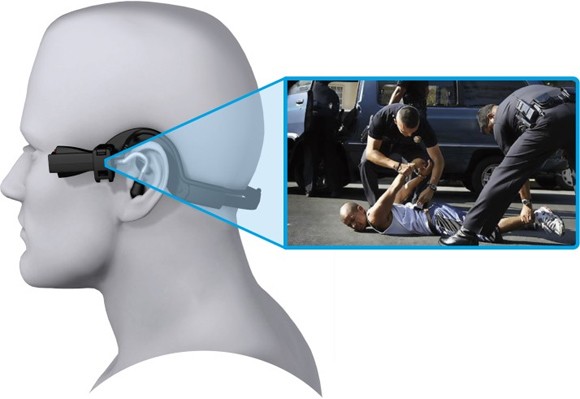
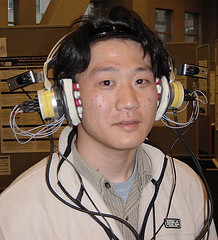
The dream of many media gangstas is it to have a constant record of the world surrounding, visual as well as audible (and possible in holographic quality). This "Feed" has been featured in quite a few science fiction writings (gibson etc pp) and as beeing heralded as the ultimate truth tool it is also a privacy fear device par excelance. Even if a camera inside your eyes and a direct soundfeed straight out of your brain would be feasable you still have that enormous amount of data where only a fraction would be interesting - sleeping would just produced a noozle sound and black pictures after all - and you sleep at least 1/2 of the time during the day (daydreaming included). This part of the problem seems to be solved by the Japanese Manabe Hiroyuki working for communication giant NTT DoCoMo. The device trains itself by looking at your attention peaks. Means when you daydream the device turns off an audio/video recording and saves the environmental setting as preset - so when you next encounter a similar situation it turns on automatically without consulting your brain. As anyone can see - this will probably stay away from massmarket at the moment. Original story found at engadget.
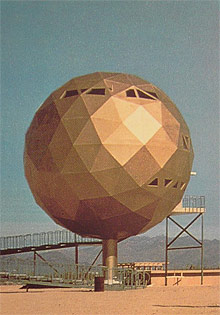
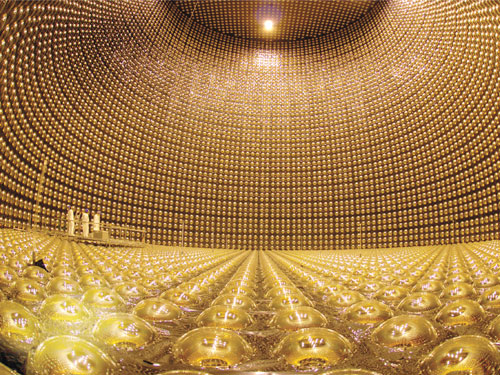
Checking out how the waves that we are are working and why the neutrinos change their state three times a day the Japanese build a research laboratory dubbed the "Chrystal Cathedral". Due to an accident the facility had to shut down after 6000 of the tubes that collect the data crashed under pressure. Now its back to work and will tell us soon the inner secrets of the world unseen. The picture is so impressive that I just need to post it - just imagine standing inside this room.
via wired
Crosspost from LiveCinemaResearchBlog
![]()
Long has it been that indy filmmakers have craved for professional shots just to get DV compression and even more HDV compression over the years while Hobby photographers were outshooting the pros with under 1.000 Euro cameras. Last year panasonic announced the AG-HVX200 to the masses and set out to take over the indy filmmaker market that isnīt falling for the HDV compression hoax Sony and its followers wants to to hype the world with. While competitively priced to the Sony and JVC HDV offerings it sported 4 times the datarate at 4:2:2 (like DigiBetacam the profession broadcast standard) instead of the lousy 4:2:0 of the HDV that shows compression artifacts from ten kilometers away and that virtually kills all post production color correction and keying. On top of declaring war on compression Panasonic also declared war on the tape by including two P2 card slots and an uncompressed firewire out stream - for easy recording to a special firestore (not a normal firewire drive!) harddrive or a computer. It included a MiniDV drive too for recording stand resolution DV video.
Now all this seemed great - expcept for the horribly small and expensive P2 cards and the nondetachable lens (easily circumvented with special filmlens adapters) - the camera has been a huge success throughout the last year.
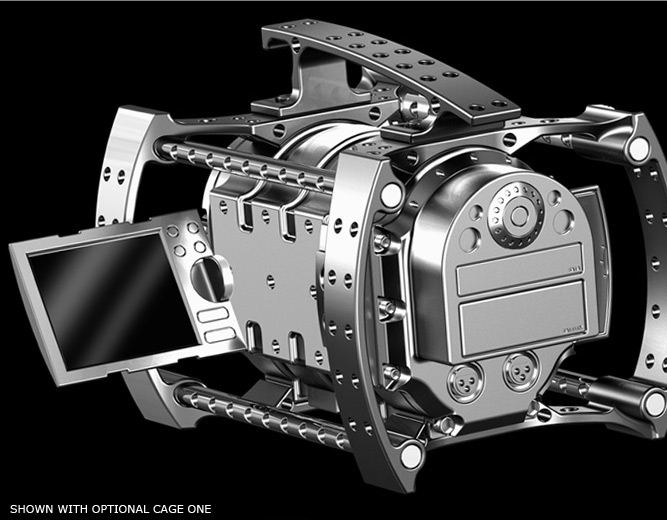
Now this years NAB was setting out to get boring with no real announcements at all. Yet there comes this company around and trumps a camera that is short of absolutely astonishing - yet a bit more pricey. The RED from the RED Digitial Cinema Camera Company is still in prototype phase but has already a price attached so a market product will follow very soon. First of all it has a CMOS sensor with full 35mm size - think of film depth of field. The sensor is apparently self produced and has no other casing then this camera. Secondly the sensor sports a resolution of 4520X2540. Thats OVER 4K resolution more then traditional 35 mm chemical film can hold. Thirdly it records in RAW format - yes not only is it uncompressed but also sport a higher bit depth for that color correction without limits. It can record up to 120fps in 2k with specific storage option on 60 fps in 4k! On top the camera is completely modular with individual parts to be upgraded individually - like switching out the CMOS censor when a better one comes available. Giving it a new casing that fits your need more (should mount, tripod, underwater skateboard unbreakable) it specifically encourages the community to make mods. Oh and of course it has no tape and sport a HD Raid
Needless to say that THIS is the camera of the future - nothing else can be desired. The price $17.500 for just the body (about a $25k package for a ready to shoot solution). Available for pre-order - no delivery date given yet.
More info at red.com.
After Fritz Langs Metropolis there has been a shortage of girly robots it seems. Now that Robots are actually in production all over the world and especially in Japan where all things girly are in fact en vouge it was just a matter of time when the robots get put into a sexy form of some sort and if you are a shiny perfect plastic fetishist you might start to love it even....
![]()
The news of robotics donīt stop rolling in. Every day you see creepy automated creatures entering our event horizon. The packmule (that I was presenting drawing a year ago) has made it into the field and the newest of them all is really eerie. A sea serpent that can actually swim and crawl on land has been succesfully tested and videotaped. ACM-R5 runs on a lithium ion batteries and can dive. A video is available on the TechBlog.
This Second Life thing is really beyond my comprehension. When I first reported about it here I thought it might be a big joke when someone shells out $25.000 for a virtual island. Then someone paid $150.000 for a virtual clubby spaceship and now the Second Life currency can officially converted between real and virtual dollars. And more. There are people "living there" that earn their real life money only virtually. Yes a cloth designer quited her day job to design with low polygons. Land owners rent out their bought land. Medicine people train inside the virtual island and making a person who creates low poly medical equipment a fortune. Other "artists" sell low poly sculptures, furniture, homes and and and... the economy in The Second Life is booming - some people making $150.000 real life dollars that is per year. Now is real life so bad that people are creating that alter ego and living it - yet even spending money there? Is this the first step to transhumans? I am going for a walk into the real woods with real snow and frosty cold air blowing into my face for the moment - thank you.
Inspired by the Wired article
An interesting article on CNNMoney that is talking about the future of the Search Engine Emperor that we all have that addiction to when it comes to expanding our mind with more or less usefull information from THE net. They interview Ray Kurzweil and a couple of other researchers, futurists and bankers to foresee the future of google. And it goes like this: Either its becoming the evil Media Mogul, or it becomes the Emporer of the Internet, or it will become God once we are ready to upload our soul into the GoogleCollectiveBrain, or it will simply die under its own weight. I would say after seeing the recent discussions on how they do in China and how they would bow down to any government other then their own the active netizens are already becoming aware of the Google gatekeepers power and only one small solution somewhere that would rival the search engine - which is still the core of Google - would take them out immediately leaving shareholders running away as fast as possible leading to a total crash. My bet is here on the distributed search engines like YaCy taking the google crown - especially in the fascist american reality.
Its nice if you read about a new technology that you think would be a great fit for your work. I mean like most VJs dream about a transparent screen for the VJ Apps interface so the crowd can actually see how hard it is to generate the life content for them and that its actually work and not just posing behind a powerbook - right?
OLED displays are the hype for the last few years but only a minimal amount of actual products have hit the market. Yet the Frauenhofer Institut (those with the MP3 codec patent) of Germany has developed a new form of those displays that are transparent. What is even cooler? When searching around where I could grab a test unit I found out that the very same university - University of Applied Sciences in Potsdam - I am still enrolled in and soon finishing at has a group in the same department as I am studying (communication design, product design, interface design) that is at work with those displays to probably develop a new ultra cool interface. Be sure that I will check out the displays myself very soon - if they have them for touching at the school.
One for the "the scary future is near" department comes surprisingly from Apple. While I love the general innovation Apple puts into its product its never THAT far ahead of the loop with its products that I would file them under "future fantasie". Not so if the newest patent application makes it into an actual product. The patent talks about a screen that can also look back at you just like you see in the cheesy Starfire movie from Sun and with that Orwell touch to it that your computer looks you straight in the eyes while you are working.
The concept is easy. Put a sensor between every pixel on the LCD panel the sensor then records while the pixel displays.
__ sensor
|
oxoxoxoxoxo
xoxoxoxoxox-----pixel
oxoxoxoxoxo
xoxoxoxoxox
The question of why is easy answered. The number one problem of webcams and webchats is that you can not look your oponent in the eye while you are talking. You either see him/her on the screen and he sees you looking down or you donīt see him/her at all while looking in the camera and he/she sees you looking at him/her. The "integrated" display would solve that problem. At the same time it could act as (fingerprint)scanner.
Now how you would focus such a beast is not clear (nanomicrolenses only on top of the sensors?). Also have a blanket ready to cover your screen while not using - just in case its watching.
The MIT advertising lab informs the world on their blog that a company called NextMedia is installing 3D flatpanel screens in high value bars. Without any glasses or other enabling gear guests will be bombarded with 30 seconds true 3D commercial interupted with the bars own program and other stuff that is displayed in 2D on the same screens. Interesting way for 3D viewing to gain a foothold in the media realm - so I am not sure if I would like to be assailed with adverts while I am in a bar paying for drinks - but modern day capitalistic realities seem to have no ethics anymore as more products you pay for sport advertising (lots of rental DVDs in the UK have an unskippable advert in the beginning and recent pushes from cellphone telcos see the new video functionality on the modern phones as a perfect way to push advertising - there is hope so that consumers will resist and a marketing backlash will occur at one point)
In a recent critique on google the economist writes that google founder Larry Page always saw himself as a world changer (for his own personal vision of a "good" world). The article isnīt giving much information and reads like a google dissing - but the really interesting part is the last paragraph where the unknown author of the article claims:
Google is already working on a massive and global computing grid. Eventually, says Mr Saffo, they're trying to build the machine that will pass the Turing testin other words, an artificial intelligence that can pass as a human in written conversations. Wisely or not, Google wants to be a new sort of deus ex machina.
So the race is up with IBM building a supercomputer last year that makes more then double the number of calculations per second thought the human brain would be capable of and the company with one of the biggest database structure in the world employing a world wide computer grid actually simulating humans intelligence to the degree of a formerly only theorized super intelligence. Lets see if they will be able to control the thing ones they breed it.
On a side note I find it rather fitting that Google undertakes such a project. They likely have the largest database to feed an intelligence in its infancy. The thing could access all and every data of the internet which would make it extremely powerful and knowledged. I think they are in a good position to make this happen - I would give them no more then six years to pull the Turing test.
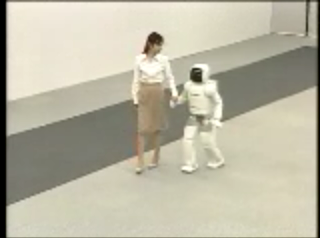
After seeing the robot videos on TokyoDV yesterday I was quite impressed on how far robotics have come. Yet today Honda - the maker of the most human like robots - the Asimo series - are introducing version 2.0 of their already outstanding robots. Besides from just walking and shaking hands of presidents they now run in circles, push trolleys and go with you on a walk. Still only very rude in self-judgment Honda seems to have pinned down the mechanical side. They are already working on version 3.0 which will have more emphasis on Artificial Intelligence and self made decisions. Now I still do not understand why no-one is discussing publicly about the impact an even half intelligent robot has on todays culture - just taking low wage jobs for any example - I guess about three quarters could be overtaken by a simple AI inside a robot that must not be much more agile then the current Asimo.
The honda site has lots of videos of the new Asimo 2.0. You couldnīt render them any better at home I guess.
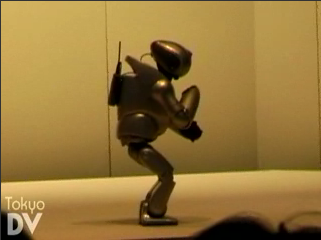
From one of the coolest vlogs on the block comes this wonderful video of a Sony Robot performing what looks like Tai-Chi. There are other dancing playing fighting real life robots on the stunning TokyoDV Videoblog - mostly shoot at the Robodex earlier this year. I knew that we have advanced quite far in robotics but looking at those creatures wave, walk backwards, nod their heads have small little gestures (totally unnecessary for movement or survival) throw balls hop around and all this perfectly smooth (no robomotion) its starting to get a little strange and fearsome. Its makes it not a single bit better that they are designed to look friendly. Look at your soon to be workforce replacement by clicking on the above link.
I had to read the article twice to really get the scope of what we are talking about here. What enthusiasts and gamers have been doing for a while under the machinima brand big TV corporations are starting to mimic and using footage from games to prep up there documentaries. So the days of realtime film creation without lenses, tapes weather conditions and acting up actors are nearing an end? I would say not yet - only in speciality films - but ask me again in five years and my answer will definitely different. Now if someone would make a "film" engine that I can load with my own character (with their own behaviours) and own environments an life like cameras and a focus on realism at 25p 720x576 rather then ultra high frame rate high res low poly - it would be a good start. More on the World War II discovery channel production on wired.com
Update: Just on the heals of this story comes anyother one via boingboing that apperently some french independent film makers have completed a whole film using Activisions "The Movie" - a game made to make movies. Sounds cool so far ONLY that Activision is claiming all rights to the finished pieces in their prohibitive Eula. Well there is hope that the open source crowd will come up with something similar soon.
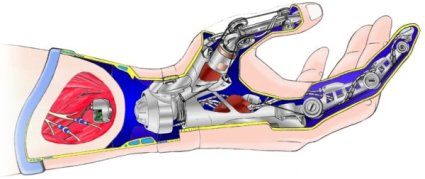
... that starts to look like a hand and works like a hand. Now yes yes we are advancing and our robot/cyborg overlords are near. Are we having a vision for the short future that will come upon us? More info on this wireless touch sensitive 6 motor and 4 nerves only hand protheses here.
The space station that will house the first virtual club that I reported about earlier this week is going over the virtual counter - and now I hope everyone is seated - for $100.000 in real world money. Yes those pixels and bits are expensive these days. This is even more expensive then the $20.000 island in the same virtual world. I am actually speechless.
![]()
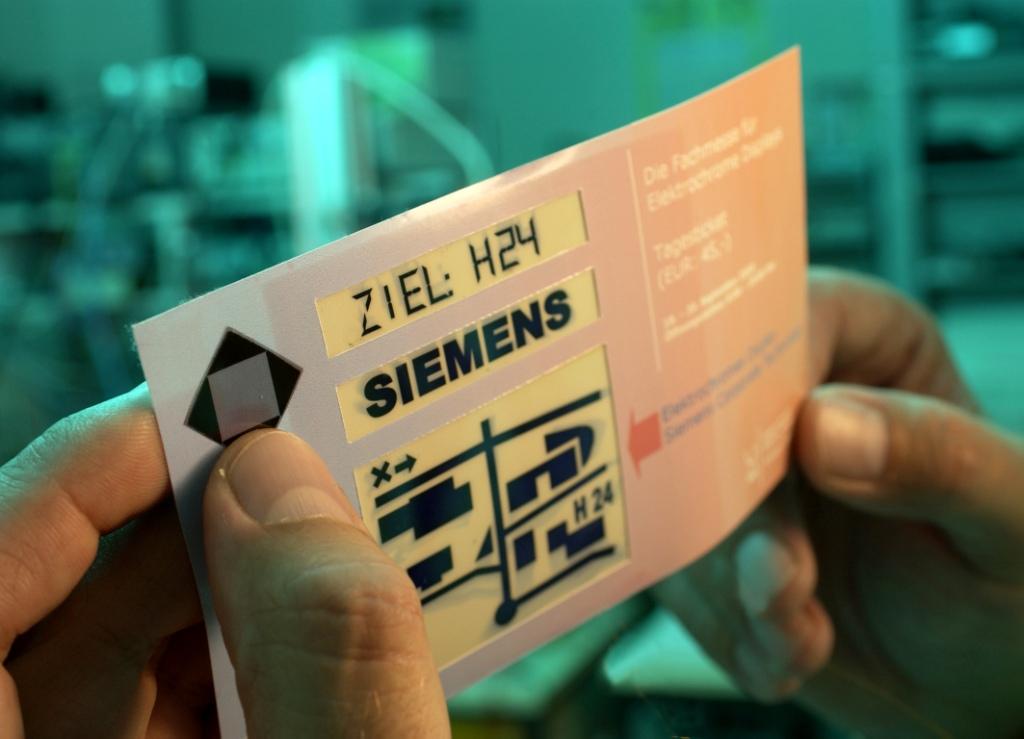
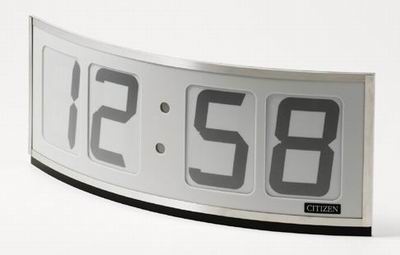
The news blurb about Siemens e-paper lasted for the day and about everyone writing about it put out a "lets see a product" mentality - including me. Now I did get some interesting background information about this technology and how Siemens wants to implement it from my China Connection. Here is an excerpt from the information sheet:
The flexible miniature displays operate using electrochromic substances, materials that change their color when an electrical voltage shifts charges in their molecules. As a result, the molecules absorb different wavelengths than in their original state. The display consists of a electrochromic material holding a pattern of electrodes. A conductive plastic foil serves as the other electrode and the transparent window. To date, the engineers have been using silicon switching elements to control the device. The objective now is to use a printing process to manufacture the entire display, including the appropriate control electronics, from conductive and semiconducting plastics.
Scientists from Siemens Corporate Technology and Automation and Drives are currently optimizing materials that react so quickly that the displays can also show moving pictures. A partner company is already working on integrating the displays into the packaging and production process.
The displays can obtain their energy from printable batteries, which are already available. Because they last only a few months, this solution is only feasible for merchandise with high throughput rates or short-use durations. It may also prove feasible to use printed antennas as a local energy source. They would receive pulses from a transmitter in the shelf and convert the pulses into electricity. The packaging, with the displays, can be disposed of in an environmentally friendly manner as a composite material.
So besides what we all knew how this would work they specifically want moving images on them AND they even want to print the battery on them AND they are environment friendly (we will see that I guess) AND on top they invent FUNKSTROM! :). So again I would like to state that this is the most promising of all e-papers I have seen out there and they think a 2007 release is a possibility but I highly doubt the FUNKSTROM (for the english readers: Funkstrom is what would likely be translated to wireless power transmission in english) becoming a reality in the first gen products.
The new empire China asks the old one - England - to build them environment friendly cities. The english Arup corporation is in charge of the building and in 2040 China wants the first city - Dongtan - to be as big as Manhatten - by 2010 its supposed to house 50.000 people. All green affordable options are on the table to make it a smogtrafficjampollutionfree selfefficentgreengoodsmelling city. They even want to grow all the food that will be available inside the citywalls - a highly interesting concept. Now the question is - what happens to the old cities if everyone moves over to the high standard new lovely oases will they be the housing for the poor the ones outside the official system? China wants to model three more after construction for the first one has started.
And The LORD said, "Lo! [they are] one people, and they all have one language, and this is what they have commenced to do. Now, will it not be withheld from them, all that they have planned to do? Come, let us descend and confuse their language, so that one will not understand the language of his companion".
Genesis 11:1-9
And then came the brilliant writer Douglas Adams (before the Americans could destroy Babel as an act of good) and reported to mankind that their where others who didnīt have gods but space ship with improbable propulsion and inter galactic highways that would need to pass through earth and that they have found a fish that is in contradiction with god and had god made disappear because its improbable for him to be existent. The fish so might be not a living animal but composed of some electrodes to be implanted